Showing posts with label COVID-19 outbreak. Show all posts

Wednesday, 5 August 2020

ORIGIN OF SARS-CoV-2: NATURAL EVOLUTION ARGUMENT


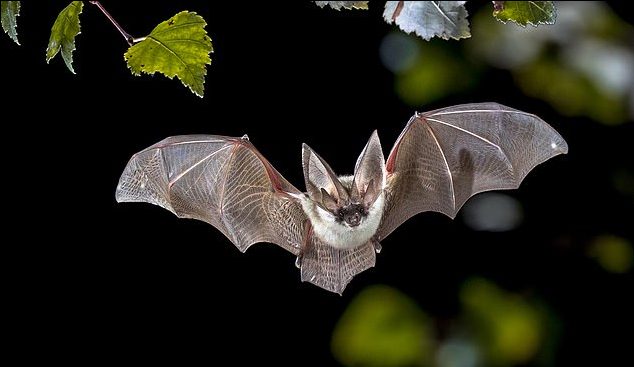
 SARS-CoV-2There is ongoing debate among policymakers, scientists and the general public about where SARS-CoV-2, the virus that causes COVID-19, came from. While researchers consider bats the most likely natural hosts for SARS-CoV-2, the origins of the virus are still unclear. On May 10 in the journal Current Biology, researchers describe a recently identified bat coronavirus that is SARS-CoV-2’s closest relative in some regions of the genome and which contains insertions of amino acids at the junction of the S1 and S2 subunits of the virus’s spike protein in a manner similar to SAR-CoV-2.
RmYN02

While it’s not a direct evolutionary precursor of SARS-CoV-2, this new virus, RmYN02, suggests that these types of seemingly unusual insertion events can occur naturally in coronavirus evolution, the researchers say.

“Since the discovery of SARS-CoV-2 there have been a number of unfounded suggestions that the virus has a laboratory origin,” says senior author Weifeng Shi, director and professor at the Institute of Pathogen Biology at Shandong First Medical University in China. “In particular, it has been proposed the S1/S2 insertion is highly unusual and perhaps indicative of laboratory manipulation. Our paper shows very clearly that these events occur naturally in wildlife. This provides strong evidence against SARS-CoV-2 being a laboratory escape.”

The researchers identified RmYN02 from an analysis of 227 bat samples collected in Yunnan province, China, between May and October of 2019. “Since the discovery that bats were the reservoir of SARS coronavirus in 2005, there has been great interest in bats as reservoir species for infectious diseases, particularly as they carry a very high diversity of RNA viruses, including coronaviruses,” Shi says. RNA from the samples was sent for metagenomic next-generation sequencing in early January 2020, soon after the discovery of SARS-CoV-2.

Across the whole genome, the closest relative to SARS-CoV-2 is another virus, called RaTG13, which was previously identified from bats in Yunnan province. But RmYN02, the virus newly discovered here, is even more closely related to SARS-CoV-2 in some parts of the genome, including in the longest encoding section of the genome, where they share 97.2% of their RNA. The researchers note that RmYN02 does not closely resemble SAR-CoV-2 in the region of the genome that encodes the key receptor binding domain that binds to the human ACE2 receptor that SARS-CoV-2 uses to infect host cells. This means it’s not likely to infect human cells.
 amino acid

The key similarity between SARS-CoV-2 and RmYN02, is the finding that RmYN02 also contains amino acid insertions at the point where the two subunits of its spike protein meet. SARS-CoV-2 is characterized by a four-amino-acid insertion at the junction of S1 and S2; this insertion is unique to the virus and has been present in all SARS-CoV-2 sequenced so far. The insertions in RmYN02 are not the same as those in SARS-CoV-2, which indicates that they occurred through independent insertion events. But a similar insertion event happening in a virus identified in bats strongly suggests that these kinds of insertions are of natural origin. “Our findings suggest that these insertion events that initially appeared to be very unusual can, in fact, occur naturally in animal beta coronaviruses,” Prof. Shi says.

“Our work sheds more light on the evolutionary ancestry of SARS-CoV-2,” he adds. “Neither RaTG13 nor RmYN02 is the direct ancestor of SARS-CoV-2, because there is still an evolutionary gap between these viruses. But our study strongly suggests that sampling of more wildlife species will reveal viruses that are even more closely related to SARS-CoV-2 and perhaps even its direct ancestors, which will tell us a great deal about how this virus emerged in humans.”

This work was supported by the Academic Promotion Programme of Shandong First Medical University, the Strategic Priority Research Programme of the Chinese Academy of Sciences, the Chinese National Natural Science Foundation, the National Major Project for Control and Prevention of Infectious Disease in China, the High-End Foreign Experts Program of Yunnan Province, the Taishan Scholars Programme of Shandong Province, the NSFC Outstanding Young Scholars, Youth Innovation Promotion Association of CAS, and an ARC Australian Laureate Fellowship.

REFERENCE

1. Cell Press. (2020, May 11). A close relative of SARS-CoV-2 found in bats offers more evidence it evolved naturally. ScienceDaily. Retrieved May 27, 2020 from https://www.sciencedaily.com/releases/2020/05/200511142202.htm

2. Global Biodefense Staff. (2020, May 11).A Close Relative of SARS-CoV-2 Found in Bats Offers More Evidence It Evolved Naturally. Global Biodefense. Retrieved May 27, 2020 from https://globalbiodefense.com/2020/05/11/a-close-relative-of-sars-cov-2-found-in-bats-offers-more-evidence-it-evolved-naturally/

IMAGE GLOSSARY

1. https://www.google.com/url?sa=i&url=https%3A%2F%2Fwww.discovermagazine.com%2Fhealth%2Fwhy-bats-are-breeding-grounds-for-deadly-diseases-like-ebola-and-sars&psig=AOvVaw3rDRhWWRsjxKQbv9q9rWc0&ust=1593872479307000&source=images&cd=vfe&v
ed=0CAIQjRxqFwoTCODpp_yjseoCFQAAAAAdAAAAABAJ

2. https://www.google.com/search?safe=active&sa=G&hl=en&tbs=simg:CAESogIJ_15BFLsomtLoalgILELCMpwgaYgpgCAMSKKMBgAaiAcYBmg-CBa0LtwuhAYQGtCeUI4IikyOGIuMrjDraK8QphSIaMLGSF-i1UPDuG1ZIErvB2ycezu1JSAqU_123B3tW_17
sP-FkufOVFgH79w0GJNs-NsQCAEDAsQjq7-CBoKCggIARIEekHmcQwLEJ3twQkajgEKGwoJY2hvY29sYXRl2qWI9gMKCggvbS8wMjB2bAoZCgZib25ib27apYj2AwsKCS9tLzA1aHhmMQoeCgpleWUgc2hhZG93
2qWI9gMMCgovbS8wMjV6cDJzChgKBnNwaGVyZdqliPYDCgoIL20vMDZ5NDcKGgoHZ2xpdHRlctqliPYDCwoJL20vMDNrcG5jDA&sxsrf=ALeKk03UYDUSKR4sjBG5F-qGM9J5hB7fmw:1596287630843&q=sar
s+1+virus+microscope&tbm=isch&ved=2ahUKEwjdj8jpivrqAhUBzDgGHbKOC7UQjJkEegQICBAB&biw=1536&bih=706&dpr=1.25#imgrc=6FZz6ZIKf-13WM

Wednesday, 20 May 2020

COVID-19 : Targeting Cells For Treatment


treating Covid-19
COVID-19 is still affecting many people worldwide. The precautions to be taken are well known to the society by now. Across the globe, the governments are hard at work establishing the physical infrastructure to fight the  andemic. At the same time, many laboratories across the world are working on clinical trials evaluating potential treatments. Researchers at MIT, the Ragon Institute of MGH, and Harvard along with colleagues from around the world have identified specific types of cells that appear to be the targets of the coronavirus, which is causing the Covid-19 pandemic.
RNA
Using existing data on the RNA found in different types of cells, the researchers were able to search for cells that express the two proteins that help the SARS-CoV-2 virus enter human cells. They found subsets of cells in the lung, the nasal passages, and the intestine that express RNA for both of these proteins much more than other cells. Alex K. Shalekfrom MIT and Jose Ordovas-Montanes, a former MIT postdoc who now runs his lab at Boston Children’s Hospital, are the senior authors of the study, which appears today in the scientific journal Cell.
Alex K_Shalek    “Our goal is to get information out to the community and to
share data as soon as is humanly possible so that we can help accelerate ongoing efforts in the scientific and medical communities,”
says Alex K. Shalek,
Associate Professor of Chemistry affliated to MIT’s Institute for Medical Engineering and Science (IMES).
Not long after the SARS-CoV-2 outbreak began, scientists discovered that the viral “spike” protein binds to a receptor on human cells known as angiotensin-converting enzyme 2 (ACE2). Another human protein, an enzyme called TMPRSS2, helps to activate the coronavirus spike protein, to allow for cell entry. The combined binding and activation allows the virus to get into host cells. Prof. Shalek’s lab, and many other labs around the world, have performed large-scale studies of tens of thousands of human, nonhuman primate, and mouse cells, in which they use single-cell RNA sequencing technology to determine which genes are turned on in a given cell type. Since last year, researchers at MIT have been building a database with partners at the Broad Institute to store a huge collection of these datasets in one place, allowing researchers to study potential roles for particular cells in a variety of infectious diseases.
Much of the data came from labs that belong to the Human Cell Atlas project, whose goal is to catalog  the distinctive patterns of gene activity for every cell type in the human body. The datasets that the MIT team used for this study included hundreds of cell types from the lungs, nasal passages, and intestine. The researchers chose those organs for the Covid-19 study because previous evidence had indicated that the virus can infect each of them. They then compared the results to cell types from unaffected organs.
Covid
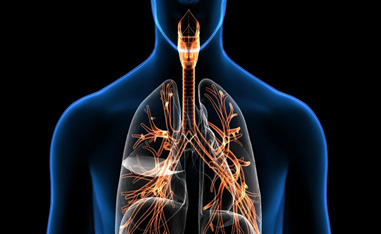
In the nasal passages, the researchers found that goblet secretory cells, which produce mucus, express RNAs for both of the proteins that SARS-CoV-2 uses to infect cells. In the lungs, they found the RNAs for these proteins mainly in cells called type II pneumocytes. These cells line the alveoli (air sacs) of the lungs and are responsible for keeping them open. In the intestine, they found that cells called absorptive enterocytes, which are responsible for the absorption of some nutrients, express the RNAs for these two proteins more than any other intestinal cell type.
“This may not be the full story, but it paints a much more precise picture than where the field stood before,” Prof. Ordovas-Montanes says. “Now we can say with some level of confidence that these receptors are expressed on these specific cells in these tissues.”
“It’s hard to make any broad conclusions about the role of interferon against this virus. The only way we’ll begin to understand that is through carefully controlled clinical trials,” Prof. Shalek says. “What we are trying to do is put information out there, because there are so many rapid clinical responses that people are making. We’re trying to make them aware of things that might be relevant.”
Prof. Shalek now hopes to work with collaborators to profile tissue models that incorporate the cells identified
in this study. Such models could be used to test existing antiviral drugs and predict how they might affect SARS-CoV-2 infection. Covid drug treatment
The MIT team and their collaborators have made all the data they used in this study available to other labs who want to use it. Much of the data used in this study were generated in collaboration with researchers around the world, who were very willing to share it, Prof. Shalek says. The researchers hope that their findings will help guide scientists who are working on developing new drug treatments or testing existing drugs that could be repurposed for treating Covid-19.


REFERENCES
1. COVID-19: “Researchers identify cells likely targeted by COVID-19 virus” (2020, April 22).Retrieved from
https://www.sciencedaily.com/releases/2020/04/200422132556.htm
2. Dhawan, B.(2020, May 1). COVID-19: Breakthrough! MIT researchers identify cells most likely to be attacked by a
coronavirus. Financial Express. Retrieved from
https://www.financialexpress.com/lifestyle/health/covid-19-breakthrough-mit-researchers-identify-cells-most-likely-to-be-attacked-by-coronavirus/1945233/
3. “Researchers Identify Cells Likely Targeted By Covid-19 Virus”. (2020, April 23).Retrieved from
https://www.enn.com/articles/63246-researchers-identify-cells-likely-targeted-by-covid-19-virus
4. Flanagan, C. (2020, April 23). Researchers Identify Cells Targeted By The COVID-19 Virus. Femina. Retrieved from
https://www.femina.in/trending/researchers-identify-cells-targeted-by-the-covid-19-virus-155320.html
5. World Health Organization. (n.d.)Retrieved May 12, 2020, from
https://www.who.int/health-topics/coronavirus#tab=tab_1

Tuesday, 28 April 2020

COVID-19, Don’t let the defense fail …

COVID-19, Don’t let the defense fail …

COVID-19 outbreak

COVID-19 outbreak is a stressful time for healthcare systems across the world. Being at the forefront of battle against this pandemic, healthcare workers especially nurses are putting their lives at stake. For every nation regardless of their geopolitical and socioeconomic status in the world, are dealing with this invisible enemy. Countries who overestimated their ability to deal with the pandemic are currently paying the price. Overwhelming rate of morbidity and mortality associated with SARSCoV-2 is not only affecting the psyche of public, but also the nurses who are the frontline warriors. It is imperative to address physical and emotional wellbeing of nurses at this instance, especially to prevent burnout and promote resilience. Efforts to mitigate struggles ranging from obtaining appropriate personal Protective Equipment (PPE) to psychological and emotional trauma associated with caregiver fatigue are important to keep the warriors battlestrong for the upcoming waves for Covid-19 pandemic.

health care workers

Compassion fatigue and related issues are as important of an issue as prevention of infection by SARS-CoV-2 virus. Since regulators and administrators are heavily focused on infection prevention strategies due to the high rate of spread of the virus and media attention, little focus has been given to keep the nurses emotionally resilient in this existential battle. As we are experiencing an unprecedented event, every one of us should take charge of this psychological support system for ourselves and our fellow beings. Concerns of transmission of illness to family and friends, societal stigma of health care workers associated with pandemic fear etc. are some of the extraneous stressors for healthcare workers. Understanding the origin of these perceptive elements will facilitate nurses to better cope with the stressors. It is important for nurses to recognize and acknowledge one’s own emotions and stressors to become emotionally resilient. Nurturing optimism and shifting focus of attention are some of the effective methods to navigate this tough time.  Journaling is another powerful tool that deescalate inner conflicts. Building and maintaining social connections is one the most effective way to promote positivity and emotional health.

We are in this together…